
15.10.26
New Zealand Mint: History, Trust, and Quality
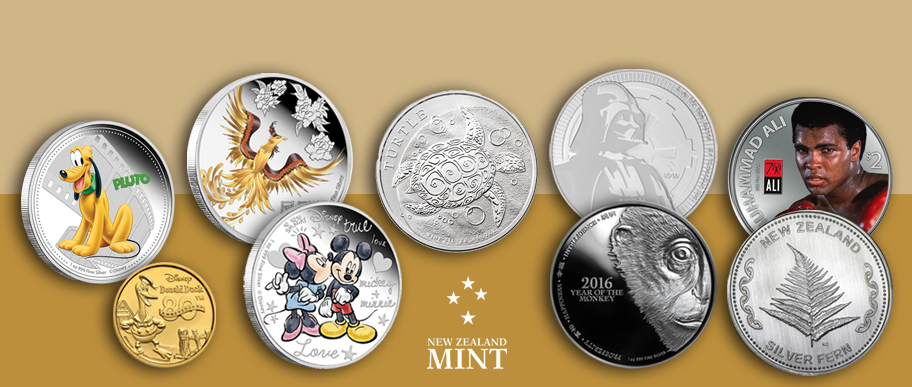
New Zealand Mint has become one of the best-known names in modern collector coins. From classic designs to popular licensed themes, its New Zealand Mint gold and silver coins appeal to collectors and investors alike. Here is how the brand earned its reputation and what to check before you buy.
Key takeaways
- New Zealand Mint is a privately owned mint based in Auckland, founded in 1967.
- It produces legal tender collector coins for Pacific nations such as Niue, the Cook Islands, Tokelau and Samoa.
- Its reputation rests on consistent detail, reliable weights and strong presentation.
- Check certificate, mintage, weight and finish, and keep all original packaging.
A brief history of New Zealand Mint
New Zealand Mint began in 1967 as a small, family-run business in Auckland. Over the decades it grew from medals and tokens into a major producer of collector coins and bullion, selling to collectors around the world.
It is important to know that New Zealand Mint is a private company, not a government agency. Many of its coins are legal tender because they are issued under the authority of Pacific nations such as Niue, the Cook Islands, Tokelau and Samoa.
How the brand earned trust
Consistent craftsmanship
Releases show sharp detail, clean fields and neat colour work, so collectors know what to expect from each new issue.
Reliable weights and purity
Coins state their metal, fineness and weight clearly, and quality bullion products are struck to those standards.
Clear provenance
Limited releases come with numbered certificates, stated mintages and branded packaging.
Wide range of themes
From wildlife and cultural designs to licensed pop-culture series, the range attracts both new and experienced collectors.
Modern minting techniques
| Technique | What it adds |
|---|---|
| Proof striking | Mirror fields and frosted details for a premium look |
| Colour printing | Bright, accurate artwork on licensed and wildlife themes |
| Gilding | Gold highlights on silver coins |
| Shaped and high-relief coins | Distinctive forms that stand out in a collection |
| Bullion production | Plain, consistent coins and bars for investors |
Authenticity and presentation: what to check
- ✔Match the certificate number, name, year and mintage to the coin.
- ✔Weigh the coin. A 1 oz silver coin should weigh about 31.1 g.
- ✔Silver and gold are not magnetic. A coin that sticks to a magnet is not genuine.
- ✔Compare colour placement, lettering and the obverse effigy with official images.
- ✔Check that the case, outer box and capsule match the release.
- ✔For more methods, see our guide to identifying authentic coins.
Watch out for copies
Popular licensed designs are often copied and sold online at prices close to bullion. If a deal looks too good and there is no certificate, walk away.
Collecting or investing?
- Collectors usually focus on themes, low mintages and complete packaging.
- Investors often prefer bullion coins and bars, where price follows the metal more closely.
- Both benefit from buying from established sellers and keeping clear records.
Collector tip: Licensed and limited releases can sell out quickly. Keep the outer shipping box too, since some buyers ask for complete original packaging.
Frequently asked questions
Is New Zealand Mint a government mint?
No. It is a privately owned company in Auckland. Its legal tender coins are issued under the authority of countries such as Niue and the Cook Islands.
Why are many coins issued by Niue?
Niue authorises many collector coin programmes, which allows mints like New Zealand Mint to produce legal tender coins with a stated face value.
Are New Zealand Mint coins a good investment?
Bullion products follow metal prices, while collector coins depend on demand and mintage. Buy collector coins mainly because you enjoy them.
Shop New Zealand Mint coins
Browse gold and silver releases at Asia Mint Collections.
Shop New Zealand Mint