
15.10.26
The Legacy and Craftsmanship of Monnaie de Paris
Few institutions anywhere can match the history of the Monnaie de Paris. Founded more than eleven centuries ago, the Paris Mint still strikes coins and medals today. Here is a clear guide to Monnaie de Paris history, the craft behind every strike, and what to look for as a collector.
Key takeaways
- The Monnaie de Paris traces its origins to the Edict of Pistres in 864, making it one of the oldest institutions in the world.
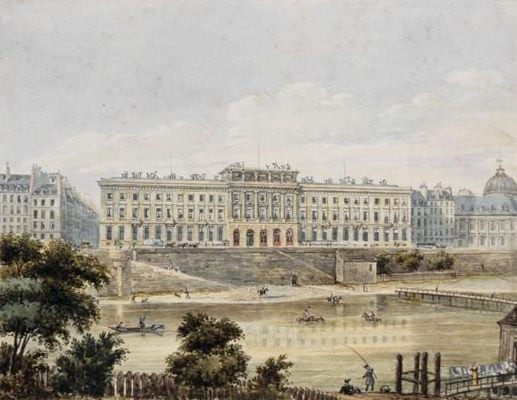
- Its home on the Quai de Conti in Paris was completed in 1775. Circulation euros are struck at its Pessac site near Bordeaux.
- Its engravers are known for refined detail, and the mint produces coins, medals and official decorations.
- Check finish, packaging and certificate, and never clean a proof coin.
Monnaie de Paris history: key eras
| Date | Milestone |
|---|---|
| 864 | Charles the Bald issues the Edict of Pistres, regulating coinage and establishing a mint in Paris. |
| Middle Ages | Royal standards for weight and fineness make the Paris mint the reference for French coinage. |
| 1775 | The neoclassical Hôtel de la Monnaie on the Quai de Conti, designed by Jacques-Denis Antoine, is completed. |
| 1803 | The franc germinal sets a stable silver and gold standard that lasts more than a century. |
| 1973 | Circulation coin production moves to a new industrial site at Pessac in the Gironde. |
| 2002 | Euro coins enter circulation. The Paris site focuses on collector coins, medals and decorations. |
From royal standards to modern minting
For most of its history the mint served the crown, and its job was to guarantee trust: every coin had to contain the right weight of metal. That focus on precision survived revolutions, empires and republics, and it still defines the mint's work. Today the Paris workshops combine traditional hand engraving with modern presses and digital tools.
How engravers turn art into a coin
Drawing and sculpting
A design begins as a drawing, then becomes a large plaster or digital model. Engravers sculpt relief depth so the image reads well at coin size.
Reduction to the die
The model is reduced and transferred to a steel die. Fine details such as hair, drapery and lettering are refined by hand at this stage.
Metal preparation
Blanks are cut, weighed, cleaned and, for proof coins, polished so the fields can take a mirror finish.
Striking
Proof coins are struck more than once at high pressure to bring up every detail. Each piece is handled individually.
Inspection and finishing
Coins are checked for marks, centring and finish before they are encapsulated and packed with a certificate.
What makes Paris Mint coins stand out
- Artistic themes: French heritage, monuments, art history and popular culture.
- Refined finishes: deep mirror proofs, frosted reliefs and selective colour.
- Medals and decorations: the mint also produces official French decorations, which shows the trust placed in its quality.
- Presentation: carefully designed cases and numbered certificates on limited releases.
Collector note
Many Monnaie de Paris collector coins are issued in several versions of the same design, such as silver proof, gold proof and base-metal coloured. Make sure you know which version you are pricing.
Buying and caring for Paris Mint coins
- ✔Match the certificate to the coin: design, year, metal, weight and mintage.
- ✔Look for hairlines and fingerprints on mirror fields under strong light.
- ✔Keep the original case and outer box, which are part of the value.
- ✔Store coins in a dry place, away from PVC and rubber.
- ✔Never polish or dip a coin. It permanently damages the finish.
Collector tip: Keep a short note of where and when you bought each coin with its certificate. Clear provenance makes a future sale faster.
Frequently asked questions
Is Monnaie de Paris the oldest mint in the world?
It is often described as one of the oldest institutions in the world still operating, with origins in the Edict of Pistres of 864.
Where are euro coins for France made?
Circulation euros are struck at the Pessac site in the Gironde. The historic Paris site on the Quai de Conti focuses on collector coins, medals and decorations.
Are Monnaie de Paris coins legal tender?
Yes. French collector coins carry a face value in euros, but their market value usually depends on metal, mintage and demand.
Discover the Paris Mint collection
Browse Monnaie de Paris coins at Asia Mint Collections.
Shop Paris Mint