
29.09.26
Ancient vs. Modern Asian Coins: What Beginners Should Know
Asian coinage spans more than 2,000 years, from bronze cash coins cast in moulds to today's precision-struck silver. If you are new to collecting, understanding how ancient and modern coins differ is the fastest way to buy with confidence and avoid fakes.
Key takeaways
- Many ancient Asian coins, especially Chinese cash coins, were cast in moulds, not struck. They look and feel different from modern coins.
- Modern coins are machine-struck to exact specifications for weight, size and finish.
- To spot authentic ancient coins, check weight, edges, style and wear against trusted references.
- Age alone does not make a coin valuable. Many ancient coins are common and affordable.
Where "ancient" ends and "modern" begins
There is no single cut-off date. Collectors generally call hand-made coinage "ancient" or "pre-modern," and machine-struck coins "modern." The switch happened at different times across Asia:
China
The Qin dynasty standardized the round, square-holed Ban Liang after unifying China in 221 BC. The Han introduced the Wu Zhu in 118 BC, and the Tang's Kaiyuan Tongbao (621 AD) set the pattern for more than a thousand years. Machine-struck coins arrived in the late 1880s, when Guangdong's new mint began striking coins by machine.
Thailand
For more than 600 years, Siam used pod duang (bullet money): bent silver bars stamped with royal marks. Minting machinery arrived from England in 1857 as a gift from Queen Victoria, and King Mongkut (Rama IV) established the Royal Mint in 1860. Bullet money was officially discontinued in 1904.
Japan
Japan's earliest official coin, the Wado Kaichin, dates to 708 AD. Modern machine-struck coinage began after the Osaka Mint opened in 1871.
India
Punch-marked silver coins, among the earliest coins anywhere, circulated in the Indian subcontinent from around the 6th century BC.
Ancient vs. modern at a glance
| Ancient Asian coins | Modern Asian coins | |
|---|---|---|
| How they were made | Cast in moulds, punch-marked or hand-hammered | Struck by machine between precision dies |
| Shape and edges | Slightly irregular; filed edges and casting flaws are normal | Perfectly round, with plain, reeded or lettered edges |
| Metal and tone | Mostly bronze and copper alloys, plus silver and gold; natural patina built up over centuries | Silver, gold, copper-nickel; bright, proof or antique finishes |
| Design | Calligraphy and simple symbols; small variations between moulds | Detailed portraits and scenes, identical on every coin |
| Weight and size | Varies within a range, even for the same type | Exact, published specifications |
| Wear | Real circulation wear, patina, sometimes corrosion | Usually uncirculated; handling marks lower the grade |
| Paperwork | Catalogue references, auction records, provenance | Mintage figures, certificates, grading labels |
Cast vs. struck: the difference that matters most
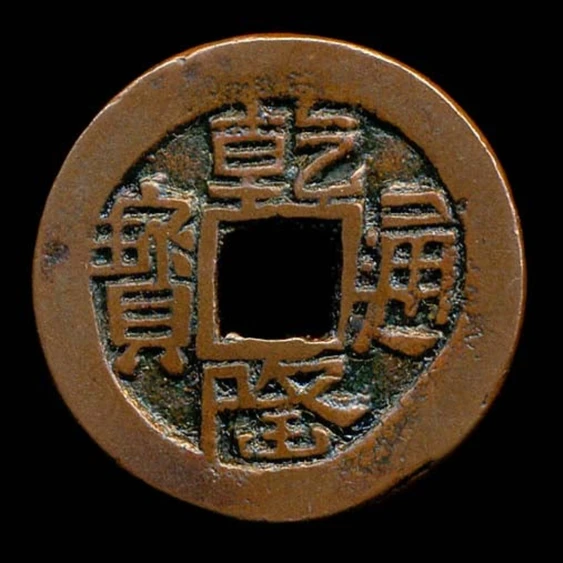
Traditional Chinese cash coins were made by pouring molten metal into moulds of clay, stone or bronze. The coins were then broken off the casting "tree" and their edges filed smooth. Many were threaded onto a square rod through the centre hole for finishing, which is one practical reason for the famous square hole. Because of this process, slightly soft details, small casting flaws and filing marks are normal on genuine cash coins.
Modern coins are struck: a blank disc is pressed between two engraved dies with tremendous force. This produces sharp, uniform detail and a consistent finish on every coin.
Why this helps you spot fakes: an "ancient" cash coin with razor-sharp edges and a perfect, bubble-free surface should make you suspicious. On the other hand, a fake of a struck coin, such as an early dragon dollar, is often cast, so it shows pitting, soft lettering or a seam on the edge.
How to spot authentic ancient coins
Check the weight
Compare against references for that exact type. Genuine coins vary, but within a known range. Copies cast from a genuine coin often come out slightly lighter and smaller, because metal shrinks as it cools.
Study the edge
Look for old filing marks and wear that matches the faces of the coin. Fresh tool marks or a crisp seam line are warning signs.
Look for style consistency
The calligraphy, character proportions and layout should match known genuine examples of the same issue. A style that looks "off" is one of the most reliable red flags.
Read the wear and patina
Real wear appears first on the high points and the areas fingers touch. Genuine patina is stable and has depth. Be wary of powdery, uniform colour that rubs off, or a crusty coating that hides the details.
Compare with trusted references
Use standard catalogues such as David Hartill's Cast Chinese Coins or the Standard Catalog of World Coins, online databases like Numista, and auction archives with clear photos.
Old collector's advice: "Buy the book before the coin." An hour spent with a good reference can save you from an expensive mistake.
What to check on modern coins
- ✔Specifications: weight, diameter, purity and mintage published by the issuing mint.
- ✔Packaging: original capsule, box and certificate of authenticity.
- ✔Finish: proof and antique surfaces show handling marks easily, and every mark lowers the grade.
- ✔Grading: for PCGS or NGC coins, verify the certification number on the grader's website.
- ✔Fakes exist here too: popular bullion coins such as Chinese Pandas are counterfeited, so weigh, measure and use a magnet test.
Which should a beginner start with?
Both are rewarding. Modern coins are easy to verify, with clear specifications and certificates, and they are a great way to learn about grading. Ancient coins offer history you can hold, and common types such as Kaiyuan Tongbao and Northern Song cash coins are widely available and affordable.
Whichever path you choose, start with common, well-documented types. Once you know what genuine coins look and feel like, you will find it much easier to judge rarer pieces.
Frequently asked questions
Why do old Chinese coins have a square hole?
It was practical. Coins could be strung together on cords for counting and carrying, and threaded onto square rods so their edges could be filed during production.
Are ancient coins always worth more than modern coins?
No. Many ancient coins survive in large numbers and are inexpensive, while some low-mintage modern coins sell for high premiums. Rarity, condition and demand matter more than age.
Should I clean an ancient coin?
No. Cleaning can strip the patina and permanently reduce the coin's value. Leave conservation to specialists.
Start your Asian coin collection
Discover historic and modern coins from Thailand and across Asia at Asia Mint Collections.
Browse the collection